
Introduction
You’ve been working for years. You earn enough to take care of your family. But when it comes time to prove financial sponsorship, suddenly it feels like none of that counts.
On paper, your income may look too low. Maybe you’re paid in cash. Maybe your taxes don’t reflect your real earnings. And now, something important—your work permit, your stability, even your ability to drive without fear—depends on how your finances look to someone reviewing your file.
This is where many people get stuck.
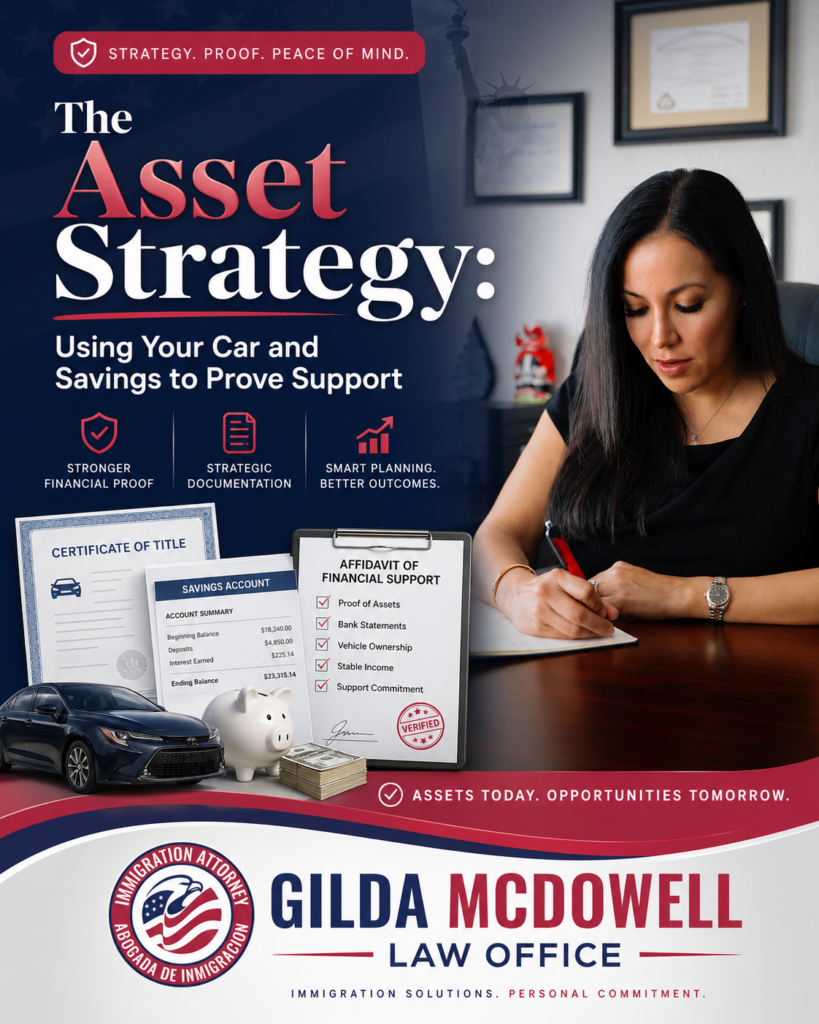
What’s often overlooked is that immigration doesn’t only look at income. There’s another path—one that many skilled workers don’t realize they can use: proving financial sponsorship with vehicle equity and savings. If you own your truck, have money saved, or have built anything of value over time, that can strengthen your case—if it’s presented the right way.
Here’s the seldom-discussed reality: officers are not just asking, “How much do you make?” They’re asking, “Are you financially stable and reliable over time?” That’s a different question—and it opens different doors.
Right now, getting this wrong can mean delays, stress, or staying stuck in the same risky situation. Getting it right can move you closer to a work permit, a license, and peace of mind.
This guide will show you how to use what you already have—clearly and effectively.
The Core Problem
The Real Gap: What You Earn vs. What You Can Prove
Most people think the problem is simple: “I don’t make enough on paper.”
But that’s not the real issue.
The real problem is this: there’s a gap between your actual financial life and what the system can verify.
If you’ve been working construction, roofing, HVAC, or plumbing for years—often paid in cash or through an ITIN—you already know this gap exists. You might be earning steady money, paying your bills, even saving. But when it comes to forms and documentation, your situation can look unstable or incomplete.
That’s where things start to break down.
Why This Becomes a Risk at the Worst Time
This gap doesn’t matter—until it suddenly matters a lot.
When you need to prove financial sponsorship, your case is judged on what’s documented, consistent, and easy to verify. Not what’s real in your day-to-day life. That’s why many hardworking people feel blindsided when their income alone isn’t enough.
And the timing is critical.
You’re not just filling out paperwork. You’re trying to move forward—get a work permit, reduce the risk during traffic stops, and stop feeling stuck in jobs that limit your growth.
The Blind Spot: Ignoring Assets You Already Have
Here’s where most people misjudge the situation:
They focus only on income—and ignore everything else they’ve built.
But proving financial sponsorship with vehicle equity and savings is not a workaround. It’s a legitimate part of how financial strength is evaluated. Your truck, your savings, your paid-off assets—these are signals of stability.
Expert insight: Immigration officers are not only measuring income. They are assessing risk over time. Assets reduce that risk because they show you can support yourself even if income fluctuates.
What This Means for You Right Now
If you only rely on income, your case may look weaker than it actually is.
If you include assets properly, your case can become stronger, clearer, and more credible.
Understanding this difference is the first step toward control.
The Hidden Dynamic: It’s Not Just What You Own—It’s How and When You Prove It
Why Timing and Presentation Quietly Decide Your Outcome
Here’s something most people never hear:
It’s not enough to have assets. It’s when and how those assets show up in your file that determines whether they help you—or get ignored.
When it comes to proving financial sponsorship with vehicle equity and savings, immigration officers are not digging deep to “figure out your situation.” They are reviewing what’s clearly presented, easy to verify, and consistent at the time of submission.
That means:
- If your bank balance suddenly jumps right before filing, it can raise questions.
- If your vehicle value isn’t clearly documented, it may not be counted at all.
- If your paperwork feels incomplete or confusing, your real financial strength may never be fully seen.
The Overlooked Rule: Stability Matters More Than Size
Many people assume: “If I show a big number, that’s enough.”
That’s not how the system works.
Semantic variation: asset-based sponsorship proof depends on consistency over time, not just total value.
Officers are trained to look for patterns:
- Steady savings over months
- Clear ownership of assets
- No unexplained changes
According to the U.S. Citizenship and Immigration Services guidelines in the , assets must be verifiable, convertible to cash, and realistically available for support. That means unclear or poorly documented assets can be discounted—even if they’re real.
Why This Hits ITIN Workers Harder
If you rely on cash income or informal payments, your financial story is already harder to prove. That puts more pressure on your assets to “carry” your case.
But here’s the risk:
If those assets are not shown clearly and early, they don’t strengthen your case—they disappear from it.
What This Means in Practice
- A paid-off truck with no clear valuation = weak evidence
- Savings with inconsistent deposits = questionable stability
- Well-documented, steady assets = strong credibility
This hidden dynamic explains why two people with similar finances can get completely different outcomes.
One looks organized and reliable. The other looks uncertain—even if they’re not.
Understanding this difference can change everything.
What’s at Stake If You Get This Wrong
This Isn’t Just Paperwork—It Affects Your Daily Safety
If you misunderstand or ignore proving financial sponsorship with vehicle equity and savings, the consequences show up fast—and in real life, not just on paper.
For someone in your position, this isn’t about “a delay.” It’s about staying stuck in a situation that already feels risky.
Financial Consequences: Staying Trapped in Low-Opportunity Work
Imagine this:
You’ve been doing roofing for years. You have steady work, but no formal work permit. A better-paying company is hiring—but they require background checks and proper documentation.
If your case is delayed or denied because your financial proof looks weak:
- You miss that opportunity
- You stay in cash-based jobs
- Your income ceiling doesn’t change
Even worse, the savings and vehicle equity you do have never get counted—because they weren’t presented correctly.
Legal Consequences: Delays Increase Exposure
Weak or incomplete financial evidence often leads to Requests for Evidence (RFEs) or denials.
That means:
- Longer waiting periods
- More paperwork
- More visibility in a system you may already feel cautious about
During that time, nothing changes—you’re still driving, still working, still exposed.
Emotional Consequences: Constant Stress and Uncertainty
There’s a mental toll that builds quietly:
- Fear during every traffic stop
- Anxiety about “what if something goes wrong”
- Frustration from doing everything right—but still feeling blocked
When your case depends on financial proof, confusion creates stress.
Long-Term Consequences: Delayed Stability
If you don’t use asset-based sponsorship proof correctly:
- Your work permit (EAD) gets delayed
- Your ability to get a driver’s license stays out of reach
- Your long-term stability keeps getting pushed back
The Bottom Line
Getting this wrong doesn’t just slow you down—it keeps you in the same cycle.
A Simple Framework to Turn Your Assets Into a Strong Case
A 5-Step System for Proving Financial Sponsorship with Vehicle Equity and Savings
If you want clarity and control, you need a process—not guesswork. This framework is built for how you think: practical, step-by-step, and focused on results.
Step 1 — List What You Actually Own (Not Just What You Earn)
Start by identifying all usable assets:
- Your vehicle (truck, car used for work)
- Savings accounts
- Any other liquid assets
Why it matters: This shifts your focus from “low income” to total financial strength.
Avoid: Ignoring assets because they don’t feel “official.”
Step 2 — Calculate Real Equity (What It’s Truly Worth)
For your vehicle:
- Find current market value
- Subtract any remaining loan
Use trusted valuation tools like Kelley Blue Book via .
Why it matters: Only real, usable value counts.
Avoid: Guessing numbers or inflating value.
Step 3 — Prove Stability, Not Just Amounts
Gather:
- 6–12 months of bank statements
- Vehicle title and registration
- Loan payoff statements (if any)
Why it matters: Consistency builds trust. Officers look for patterns, not snapshots.
Avoid: Sudden large deposits without explanation.
Step 4 — Match Assets to the Income Gap
This is where asset-based sponsorship proof becomes strategic.
- Calculate how far your reported income is from the required level
- Use assets to cover that gap (often multiple times the difference)
Why it matters: This turns assets into a measurable solution.
Avoid: Submitting assets without showing how they solve the shortfall.
Step 5 — Present It Clearly and Simply
Organize everything:
- Clear labels
- Straightforward calculations
- No contradictions
Why it matters: A clear file gets understood faster—and trusted more.
Avoid: Overcomplicating or submitting messy documents.The Result of Following This Framework
You move from “hoping it works” to showing exactly why you qualify.
That’s the difference between delay and progress.
A Strong Outcome Actually Looks Like
When Everything Is Done Right: Control, Not Guesswork
A strong outcome isn’t just “approval.” It’s clarity, speed, and less stress from the beginning.
Picture this:
You’ve organized your documents. Your truck is properly valued. Your savings show steady deposits over time. Instead of relying only on income, you’ve clearly shown proving financial sponsorship with vehicle equity and savings in a way that makes sense on paper.
When your file is reviewed, it tells a simple story:
You are stable. You are consistent. You can support yourself.
That changes everything.
Strong Outcome vs. Weak Outcome
Strong Case (Prepared and Structured):
- Your assets clearly cover any income gap
- Your documents are clean, consistent, and easy to verify
- Fewer delays, fewer follow-up requests
- Faster movement toward your work permit and driver’s license
- Less stress every time you get behind the wheel
Weak Case (Unclear or Incomplete):
- Income looks too low with no backup
- Assets are missing, undervalued, or confusing
- Delays, Requests for Evidence, or denials
- More time stuck in risky, cash-based work
- Ongoing fear and uncertainty
Why This Matters for Your Daily Life
For someone in construction or skilled labor, this isn’t abstract.
A strong case means:
- You can move toward jobs that require documentation
- You reduce the risk of being exposed during routine stops
- You stop relying on “hope” and start relying on structure
According to Migration Policy Institute, stable documentation and financial credibility play a key role in long-term integration and access to better economic opportunities. You can explore broader insights here:
The Real Goal: Peace of Mind and Forward Movement
When asset-based sponsorship proof is done right, you feel the difference:
- Less second-guessing
- Less exposure
- More control over your future
It’s not about having perfect numbers.
It’s about showing a clear, reliable picture—at the right time, in the right way.
FAQs
1. Can I use my car when proving financial sponsorship with vehicle equity and savings?
Yes, your car can be a strong asset if you actually own it or have equity in it. What matters is the real value—the market price minus any loan balance. You’ll need clear proof like the title, registration, and a reliable valuation. If presented properly, your vehicle shows stability and responsibility, which strengthens your overall case.
2. How much savings do I need for proving financial sponsorship with vehicle equity and savings?
It depends on how far your reported income is from the required level. In many cases, assets must cover that gap multiple times, not just match it. Savings are most effective when they show consistency over several months, not just a one-time deposit. The key is to show that your money is stable and available if needed.
3. Does cash income count when proving financial sponsorship with vehicle equity and savings?
Cash income alone is difficult to rely on because it’s harder to verify. That’s why combining it with assets like savings and vehicle equity becomes important. Assets help “fill the gap” when income isn’t fully documented. This approach creates a more complete and credible financial picture.
4. What documents are needed for asset-based sponsorship proof?
You’ll typically need bank statements (6–12 months), vehicle title and registration, and proof of any loan balance. If you’re using savings, consistency matters more than just the total amount. Everything should be easy to read and match across documents. Clear documentation reduces the chances of delays or questions.
5. Can I combine savings and vehicle equity to strengthen my case?
Yes, combining assets is often the smartest strategy. Savings and vehicle equity together can cover a larger income gap and show stronger financial stability. This is especially helpful if neither asset alone is enough. The goal is to present a complete picture, not rely on just one piece.
6. What happens if I don’t include assets in my sponsorship proof
If you rely only on income that appears low, your case may look weaker than it really is. This can lead to delays, requests for more evidence, or even denial. You may end up waiting longer while staying in the same risky situation. Including assets helps avoid these unnecessary setbacks.
7. When is the best time to prepare assets for proving financial sponsorship?
Start as early as possible—months before filing if you can. This allows your savings to show a steady pattern and gives you time to organize documents. Last-minute preparation often looks inconsistent and raises questions. Early planning creates a smoother and stronger submission.
8. Can a paid-off truck improve my chances of approval
Yes, a paid-off truck can be a major advantage if properly documented. It represents real value that can be converted into cash if needed. For many skilled workers, this is one of the strongest assets they have. The key is showing its true market value clearly.
9. Do I still need a co-sponsor if I have assets?
Not always. If your assets are strong enough to cover the income gap, you may not need a co-sponsor. However, if there’s still a shortfall, a co-sponsor might be necessary. The decision depends on how well your total financial picture meets the requirements.
10. What are the biggest mistakes to avoid when using assets for sponsorship?
The most common mistakes are unclear documentation, sudden unexplained deposits, and guessing asset values. Another big mistake is waiting too long to prepare. These issues can make a strong financial situation look weak on paper. Staying organized and consistent helps you avoid unnecessary problems.
Conclusion
When income alone doesn’t reflect your real situation, it creates risk—delays, stress, and staying stuck in the same cycle. The hidden dynamic is simple but powerful: immigration decisions are based on what’s clear, consistent, and easy to verify. That’s why proving financial sponsorship with vehicle equity and savings can change the direction of your case.
Your truck, your savings, your years of work—they already tell a story of stability. The difference is whether that story is organized and presented in a way that builds trust.
If you ignore this, the outcome is uncertainty: more waiting, more exposure, more frustration.
If you act with a clear strategy, the outcome is control: fewer delays, stronger credibility, and a real path forward.
You don’t need perfect numbers. You need a clear plan.
If you want to understand how your specific assets can be used to strengthen your case—and avoid the risks outlined here—consider reaching out for a confidential conversation. The goal isn’t pressure; it’s clarity, protection, and making the smartest next step for your situation.